Table of Content
Passing from the tunnel downwards, it runs below a muscle of forearm called supinator muscle. The supinator muscle allows rotation of wrist in clockwise direction. Once the radial nerve comes out from below the supinator muscle, it further travels down the back of forearm innervating muscles of the forearm. UltrasoundUltrasound is recommended for radial nerve entrapment that is acute, subacute, or chronic. If you have radial tunnel syndrome, these exercises can help stretch and strengthen the muscles and tendons around the affected nerve. If you experience pain, stop the exercise and consult your doctor.

Stretching and strengthening the muscles of the forearm can also help to relieve your pain and tenderness. If it’s performed, it would usually be done as an outpatient surgery. Although reported less often, some patients describe the pain as cutting, piercing, or stabbing.
Tarsal Tunnel Syndrome
Treatment for radial tunnel syndrome can range from home remedies to surgery. According to the American Academy of Orthopaedic Surgeons, the pinch commonly occurs in the elbow because the muscles, tendons, and bones form a tight tunnel that can pinch the nerve. Patients with a brachial plexus injury have a variety of presentations depending on the location of the injury.

Doctors may ask about symptoms and whether the pain worsens with movement. They may also ask about the type of work and sports a person does. Radial tunnel syndrome can develop due to compression anywhere along the length of the radial nerve. 11.Prasartritha T, Liupolvanish P, Rojanakit A. A study of the posterior interosseous nerve and the radial tunnel in 30 Thai cadavers.
IV Treatment & Hangover
Choosing exercises should, in this case, be left to the discretion of physiotherapist. The radial nerve is prone to injury, even from minor incidents, such as sleeping on the arm. A look at forearm pain, a condition characterized by pain between the elbow and the wrist. People who work in a physically demanding job or have an underlying health condition are at a higher risk of radial tunnel syndrome. People can consult with a doctor if they experience persistent pains or aches in the forearm, elbow, wrist, or hand. Those who work in labor-intensive jobs or play contact sports should look out for these signs.
Use your other hand to grasp your affected forearm just below the elbow and pull it gently across your body until you feel a stretch in the muscles on the inside of your forearm. There are both surgical and non-surgical treatments for tarsal tunnel syndrome. Non-surgical treatments are typically utilized with less serious cases, while surgery is limited to those situations where tarsal tunnel syndrome impedes the operations of daily living. The best way to deal with Radial Tunnel Syndrome is to ensure that the hands are well-rested.
Surgical treatment
It helps to create more space in the radial nerve and reduces the pressure. Radial Tunnel Syndrome happens when an injury or pressure is on the radial nerve. It can cause some consequences such as weakness and pain in the arm. An individual with this condition may also face lots of difficulties in doing daily activities such as lifting any object.
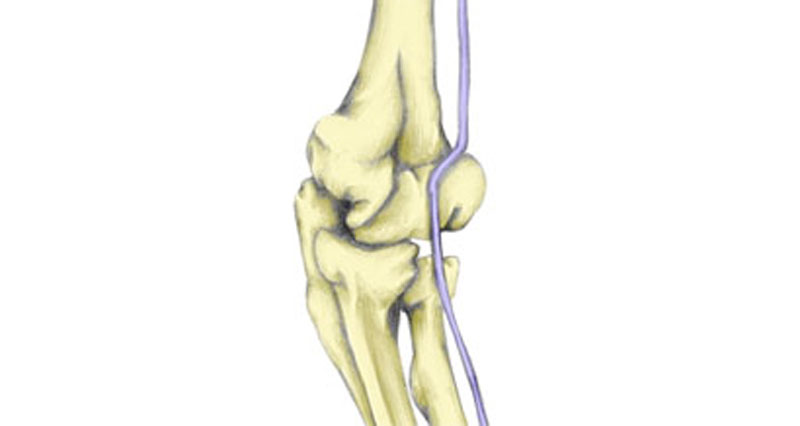
There are many surgical techniques to treat radial tunnel syndrome, and there can be significant differences in surgical outcomes. A common way is to make a cut between the forearm muscles to open the space for the nerve to pass through. The surgeon will remove all sites of compression on the nerve. Some surgeons will also treat tennis elbow, which can occur at the same time as radial tunnel syndrome, during the surgery. Recovery might take three to six months and benefit from therapy to allow muscles and nerves to recover and prevent scarring. Risks of surgery include general risks of anesthesia, injury to the nerve, persistent pain, scarring, and weakness.
How to Diagnose Radial Tunnel Syndrome?
Recovery from radial tunnel syndrome surgery can take several weeks. You may need to wear a splint or brace for a few weeks to keep the affected area from moving too much. You’ll likely need physical therapy to help you regain strength and range of motion in your arm. Surgery carries a risk of complications, such as infection, nerve damage, and blood clots. Ultrasound, magnetic resonance imaging , and electromyography can be utilized to rule out other pathologies that can underlie lateral elbow pain.

They are the best to tell you that you are experiencing symptoms of RTS or any other condition bothering you. Overuse of the arm in movements like pinching, gripping and bending. Elbow is also the most common place where this occurs as it travels through a spot that consists of the muscle, tendons, and bone. Diabetics, tumors, or cysts in the arms can also increase the risk of having a Radial Tunnel.
This sudden radial nerve compression in the region can impact the arm and cause severe discomfort and restrict movement. The radial nerve runs from the neck to the arms and controls the movements in the arms and even the finger. The radial tunnel is called a tunnel because it is a narrow area through which the radial nerve passes around the elbow and through the forearm to the hand.
Avoid repeated use of wrist in twisted motion, for example while using a screw driver. Low-Level Laser TherapyLow-Level Laser Therapy is not recommended for radial nerve that is acute, subacute, or chronic entrapment. Right radial nerve decompression for refractory radial tunnel syndrome. Sit with your legs outstretched in front of you and your back straight. Place your affected arm across your body at chest level, with your elbow bent and your hand pointing toward the floor on the opposite side of your body.
Physical therapies may be advised to strengthen arm muscles, which can prove to be helpful. If there is pain in any of the above movements, chances are high that the patient is suffering from radial tunnel syndrome. The annual incidence rate of the posterior interosseous nerve compression is estimated 0.03% while the rate for superficial radial nerve compression is 0.003%. In comparison, the most common neuropathy, carpal tunnel syndrome, has an annual incidence between 0.1% and 0.35% in the general population. Directed nerve glides can help to loosen the nerve and its surrounds, as well as increasing blood and oxygen flow to the affected area . A simple glide involves dropping the hands to the sides, palms to the back.




No comments:
Post a Comment